
Lighting Journal
Bedside Wall Sconces: Where Should They Go?
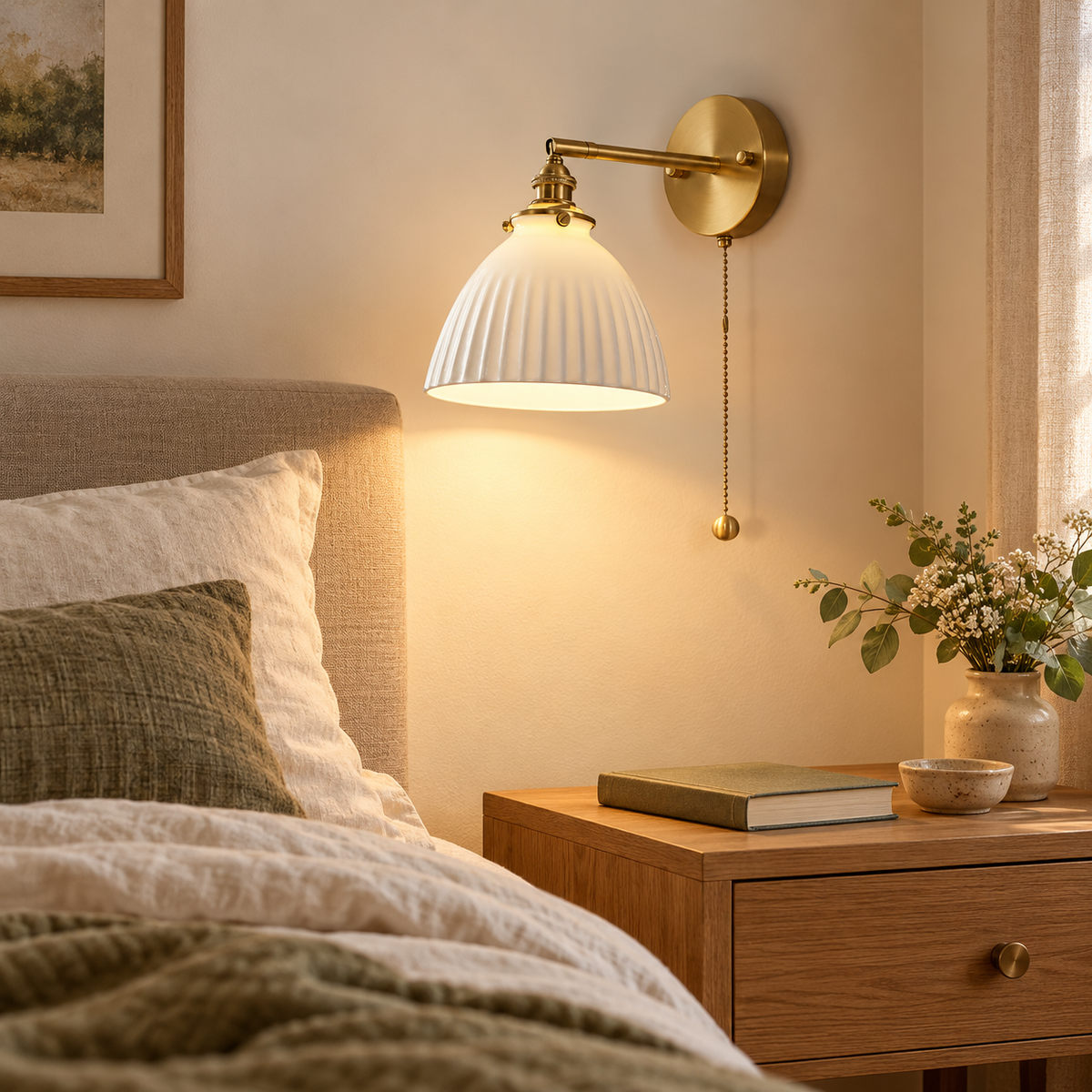
For a bedside reading sconce, start with the light about 4–5 inches above your shoulder while seated in bed, as Schoolhouse suggests. Around 5 feet from the floor is another common starting mark, but mattress height and the reader’s posture change the useful position. Test the actual shade and switch location before a hardwired wall box is placed.
Begin with the way you use the bed
If you read at night, hold a book or tablet in your usual position and notice where you need the light. A focused or adjustable sconce may help direct illumination toward the page; a broad, diffused shade may be better for gentle atmosphere. Those descriptions are design possibilities, not features of every wall light, so check the selected product’s shade and light source.
If the room is shared, repeat the test on both sides of the bed. Different people may sit at different heights or prefer different amounts of light. A matching pair can still be positioned to suit the people using it.
Use the shoulder mark as the first mock-up point. Schoolhouse’s bedside guide describes about 5 feet from the floor as a traditional reference and recommends adjusting to the bed and person. Measure to the part of the fixture that matters for light and reach; a backplate center alone cannot tell you where the shade or switch will land.
Check the headboard and the nightstand
Before marking the wall, measure the headboard height and the nightstand width. A sconce should feel connected to the bedside area without disappearing behind the headboard or crowding artwork, shelving, or curtains. The shade should be high enough to be comfortable when sitting up, yet close enough to serve its purpose.
Cut a paper outline of the fixture’s full width and hold it against the wall. Then look from the doorway and from the pillow. This simple mock-up catches a common problem: a backplate that looks well placed on an empty wall while the shade itself intrudes into the space you need.
Make the switch easy to reach
A beautiful bedside light is less useful when you have to get out of bed to turn it off. If the fixture has an integrated switch, check whether it can be reached comfortably from a seated position. If the switch is elsewhere, plan how you will control the light before installation. Dimming capability and bulb compatibility vary by product and control setup.
Decide whether the sconce should read or glow
For reading, focus on where the light lands on the page and whether the bulb or bright interior of the shade is visible from the pillow. For atmosphere, look at how the light touches the wall and the materials around the bed. A room often benefits from both a practical bedside source and a quieter general layer, rather than relying on a single fixture to do everything.
Compare two bedside control options
Auvielight’s Pleated Ceramic Wall Sconce is described for bedside use and has a pull-chain switch. Its ceramic shade is 6.7 inches (17 cm) across, with a 13.4-inch (34 cm) arm, and the fixture is hardwired. The pull-chain length is not listed. Confirm that it can be reached from your bed before choosing the wall-box height.
The hardwired Aluminum Reading Wall Sconce has a pivoting integrated LED head. Its visible-button variant places a control on the faceplate. Check the faceplate button against your seated reach during the wall mock-up before fixing the mounting position.
Set the electrical position before the wall is closed
For these hardwired examples, do the full-size visual and seated-reach test before an electrician locates the wall box or the wall is closed. Give the installer the exact variant, backplate dimensions and intended control position so the wiring point supports the layout. A later visual test may be too late to move a concealed box easily.
The aim is a light that belongs to the bedside routine: easy to use, comfortable to sit beneath, and calm in the room when it is switched off.
Explore other shapes in Auvielight’s Wall Lights and Bedroom Lighting collections.
Sources and further reading
- Schoolhouse, Easy Home Upgrade: Plug-In Light Fixtures — seated-shoulder reading-light starting point.
- Schoolhouse, Proper Wall Sconce Placement — bedside height and switch reach.
- Visual Comfort, Wall Light Tips and Placement Ideas — placement considerations.