
Lighting Journal
Renter-Friendly Wall Sconces: What “Plug-In” Really Means
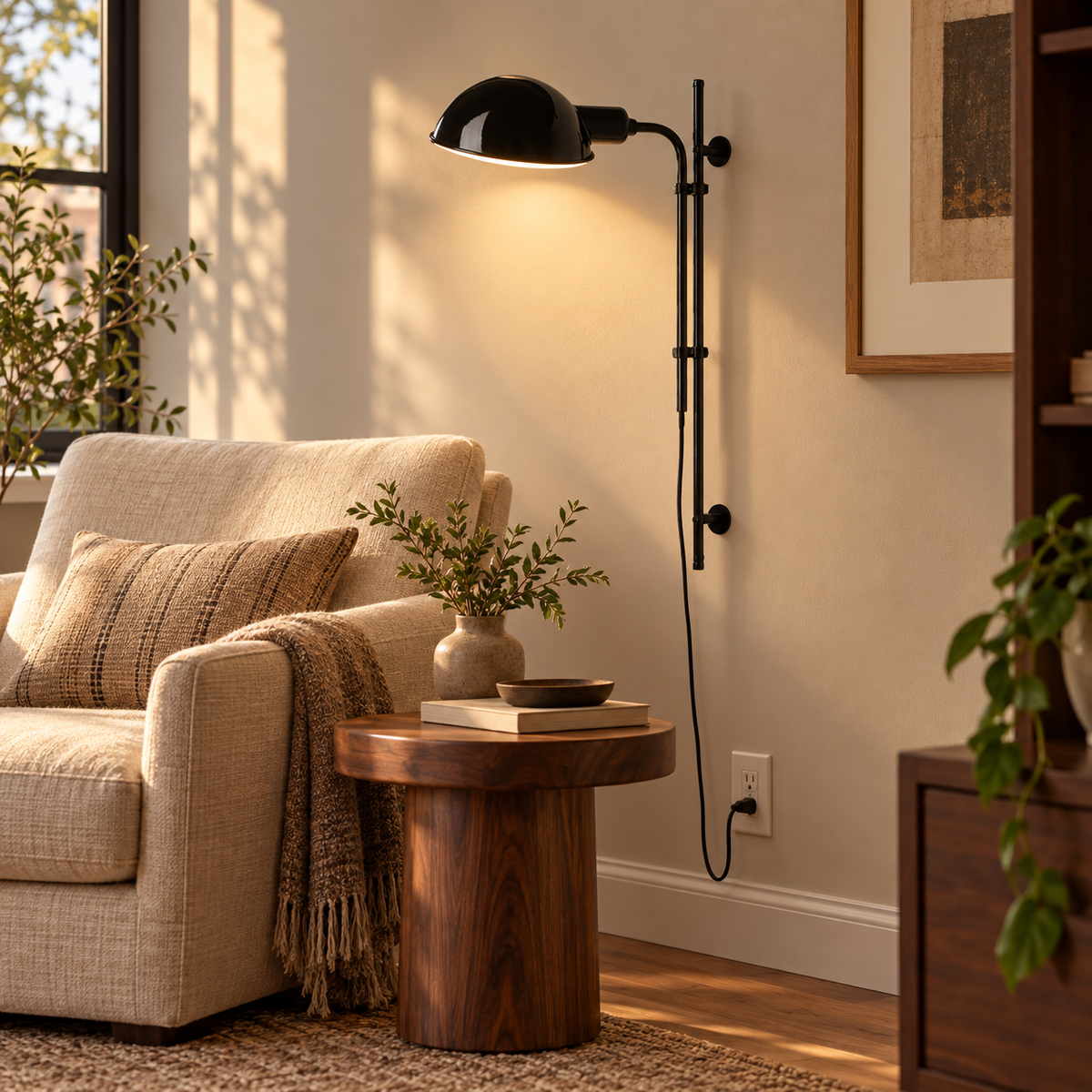
Short answer: For a rental, start with a plug-in wall sconce if you want wall-level light without changing the electrical wiring. “Plug-in” does not mean “no marks on the wall”: many sconces still need screws or anchors. Before buying, check the lease, the wall material, the distance to a permanent outlet, and where the cord will run.
What makes a wall sconce easier to use in a rental?
A plug-in model takes power from a receptacle instead of a wall junction box. That can make it a useful choice beside a reading chair or at a bedside where the existing ceiling light is too far away. You still need a secure mounting method suited to your wall and the fixture. In its plug-in sconce installation guide, Schoolhouse describes mounting brackets, screws, and drywall anchors for its own fixtures. Your sconce may use different hardware, so follow its product instructions rather than copying another maker’s drilling pattern.
If your lease limits holes, ask what can be patched at move-out. If it prohibits drilling, a floor or table lamp may fit the room better than a wall-mounted fixture. A removable adhesive hook is not a substitute for a mount unless the fixture maker explicitly approves it for that model and wall surface.
Plan the outlet and cord before choosing a location
Put a piece of painter’s tape where the sconce would sit, then measure the route from the fixture to an existing outlet. Imagine the full cord path: behind furniture, along the baseboard, and clear of doors, walkways, and places where it could be pinched. Also check whether the fixture’s control will be within reach when you are seated or in bed. A product described only as “plug-in” may not tell you where its switch is.
A cord that cannot reach the outlet is a reason to rethink the location or choose another fixture. The Electrical Safety Foundation International says an extension cord is a temporary solution and should not replace permanent wiring; it also warns against routing extension cords through walls, doorways, ceilings, or floors.
Plug-in and hardwired are different decisions
- Plug-in: Check the correct plug option, outlet position, cord route, mounting hardware, and switch location. This is the route to explore when you want to avoid electrical alterations.
- Hardwired: Check the junction box location and get the property owner’s approval before electrical work. Have a qualified installer assess the fixture and local requirements.
- No wall mounting: Use a table or floor lamp if the lease or wall surface makes a mounted fixture impractical.
An Auvielight example
The Modern Wall Sconce in metal is listed as a surface-mounted plug-in fixture, with a US Plug variant and an adjustable metal shade. That makes it a relevant example of the plug-in route. Its current product description does not specify the cord length or the exact switch position, so confirm those details before choosing a mounting spot. Do not treat its adjustable shade as proof that it can be installed without holes.
Compare it with other shapes in our Wall Lights collection. Look at the fixture, outlet, and actual wall together: the best-looking position on a mood board is only useful if it works in the room.
Sources
- Schoolhouse, “How-To: Install a Plug-In Wall Sconce” — illustrates that plug-in fixtures may still require bracket mounting and anchors; its instructions apply to its own products.
- Electrical Safety Foundation International, “Extension Cord Safety Tips” — extension cords are temporary and should not replace permanent wiring.
- Auvielight, Modern Wall Sconce in metal product details — plug-in construction and US Plug variant.