
Lighting Journal
What Size Picture Light Do You Need for Artwork?
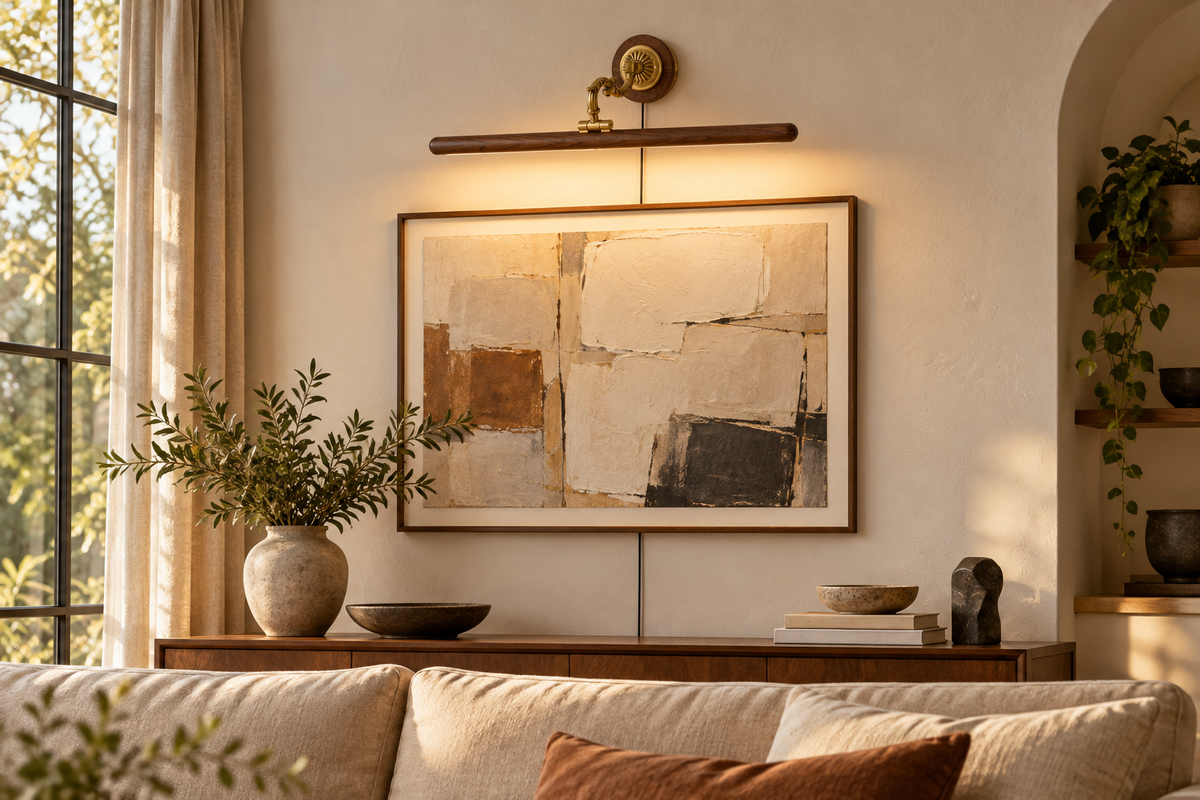
Short answer: Measure the width of the framed artwork first. A picture light around half that width is a useful visual starting point for some designs, but it is not a universal fit rule. The bar length, shade length, number of heads, beam spread and frame depth can change the result. Mock up the light above the actual art before you choose a size.
Start with the frame, not the empty wall
Record the outside width of the frame, the height of the picture and how far the frame projects from the wall. Then mark the artwork's center line with removable tape. Keep the proposed light centered on the art, even if the art is off-center on the wall. This makes the relationship between the two objects easier to judge from the normal viewing position.
For a 36-inch-wide frame, half the width is 18 inches. That is a planning example, not a requirement to buy an 18-inch light. House of Troy suggests about half the image width for its Classic picture lights and about two-thirds for its Slim-Line designs. Visual Comfort gives a half-width rule for the shade on one of its picture-light pages. These different manufacturer rules show why you should check which part of a fixture is being measured.
Compare length with the actual spread of light
A long bar is not automatically an even wash. Before ordering, look at the light source, shade or head arrangement, how far the fixture projects, and whether its angle can be adjusted. A tall frame, glass glazing or heavily textured surface may reveal bright spots or reflections that are invisible in a front-facing product photograph. If the maker does not publish beam information, treat the proposed size as a visual estimate and test the effect in the room.
The Auvielight Ornate Picture Light lists five overall lengths, from 13.8 to 39.4 inches, and a plug-in cord. Those are overall product options; the page does not provide a measured beam width. The Gallery Artwork Picture Light takes a different route with one to five spot heads across listed lengths from 4.5 to 36.6 inches. It is hardwired, so its junction-box location should be planned before the wall is finished.
Make a quick wall test
- Cut a strip of paper to the listed fixture length and tape it above the frame. View it from the doorway and the seat where you usually see the artwork.
- Check the product's projection and the frame depth. Leave room for the fixture and its mounting hardware without pressing on the artwork.
- Decide where power comes from. For a plug-in design, plan the outlet and cord route; for a hardwired design, plan the electrical point with a qualified installer.
- At night, assess the real light on the art and any glare in the glazing. If the work is valuable or light-sensitive, seek conservation guidance before adding dedicated illumination.
Browse more shapes in Living Room Lighting. The right light is the one that fits both the artwork and the way the room is used.
Sources
- House of Troy, Picture Light FAQ — maker-specific half-width and two-thirds starting points.
- Visual Comfort, Library Picture Light — half-width guidance stated for the shade.
- Auvielight, Ornate Picture Light product details — listed lengths and plug-in connection.
- Auvielight, Gallery Artwork Picture Light product details — head configurations, listed lengths and hardwired mounting.